Balé da Cidade de São Paulo
Through the breadth of its repertoire, the quality of its productions, and its influence, this company remains a cornerstone of Paulist and Brazilian culture, while engaging with the global choreographic scene.
Balé da Cidade de São Paulo (Ballet of the City of São Paulo) is the official company of one of the world’s largest metropolises. Reflecting the city whose name it bears, it asserts a distinctly cosmopolitan identity and an ever-evolving artistic spirit. Founded on February 7, 1968, under the name Corpo de Baile Municipal, the company’s initial mission was to accompany opera productions at the Theatro Municipal de São Paulo and to perform works from the classical repertoire, under the artistic direction of Johnny Franklin.
In 1974, under the guidance of Antônio Carlos Cardoso, the company took a decisive turn towards contemporary dance, a direction that would leave a lasting imprint on its artistic identity. This shift marked the beginning of an extensive period of choreographic research and innovation, gradually establishing Balé da Cidade as a major force in the South American dance scene. On September 25, 1981, the company officially adopted its current name.
The 1980s were a period of intense experimentation: dancers were encouraged to develop their own choreographic proposals, turning the company into a true creative laboratory and fostering the emergence of influential figures in Brazilian dance. International recognition began with the company’s participation in the Lyon Dance Biennale in 1996, a pivotal moment in its trajectory. Since then, Balé da Cidade de São Paulo’s European and international tours have been widely praised by critics and audiences alike.
From 2001 onwards, the company expanded its activities by developing outreach programs and parallel cultural projects, primarily through educational initiatives in the city of São Paulo. Since summer 2023, the artistic direction has been led by Alejandro Ahmed, a major figure in Brazilian contemporary dance, renowned for his innovative approach and commitment to choreographic research. Under his leadership, the company continues to explore a stage language in dialogue with its time.
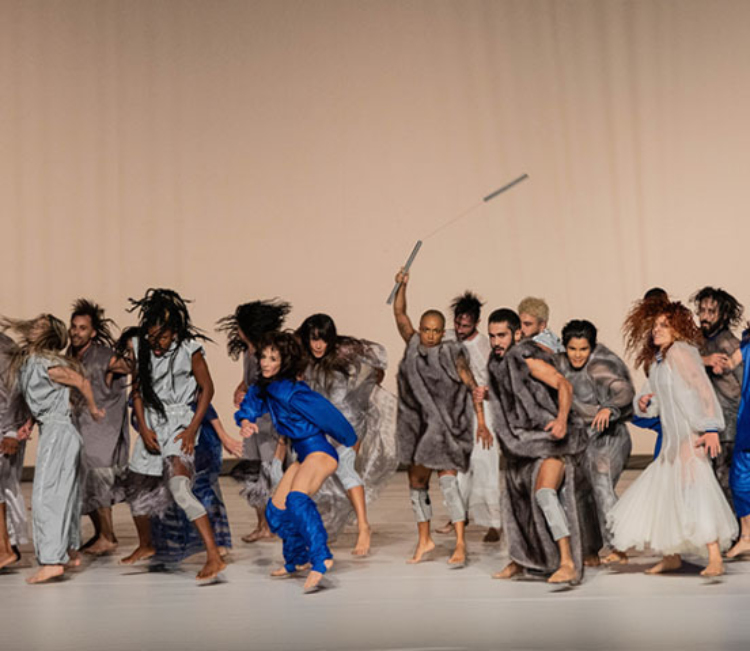
Electro-Brazilian rhythms, infectious energy, and the sheer pleasure of movement: this double bill by Balé da Cidade de São Paulo celebrates dance that is explosive, visceral, and boldly collective. An electrifying sensory journey.